Showing posts with label news. Show all posts

Tuesday, April 30, 2013

The Outsider Argentina: A look from the outside to the outside


The Outsider Argentina recently posted an interview with Lisa Furtado, owner of +Farrah Furtado Couture. The Outsider Argentina is a new project written by Samantha Schuster including interviews with musicians, actors, directors, and writers, among others, who live abroad.
She says:
"Despite the fact that our entertaining business is quite good, I always look up to other countries such as the US or UK. I believe that it is really interesting to know and learn about other things and compare to our own culture."
Sami studied journalism at the Universidad del Salvador, in Buenos Aires, and worked as a columnist for the radio programme, Acción 2.0.

Monday, March 11, 2013

Free Dress Givaway!

Owner of Farrah Furtado Couture at her LA book
signing wearing a custom tailored dress made from
organic silk in a personalized graphic print.

Enter our contest today for a chance to win a FREE dress custom tailored for you! The grand prize winner will have the opportunity to work with our owner +Farrah Furtado to create the dress of her dreams! Three first prize winners will be given a $50 gift certificate towards any purchase this year. All winners will also receive an autographed copy of Lisa Furtado's debut novel Her Apparitions & Other Human Longings! This contest is open to applicants is all countries, make sure you enter today! Visit our Facebook Fan Page to submit an entry.

Thursday, January 31, 2013

Style Icon: Michelle Obama


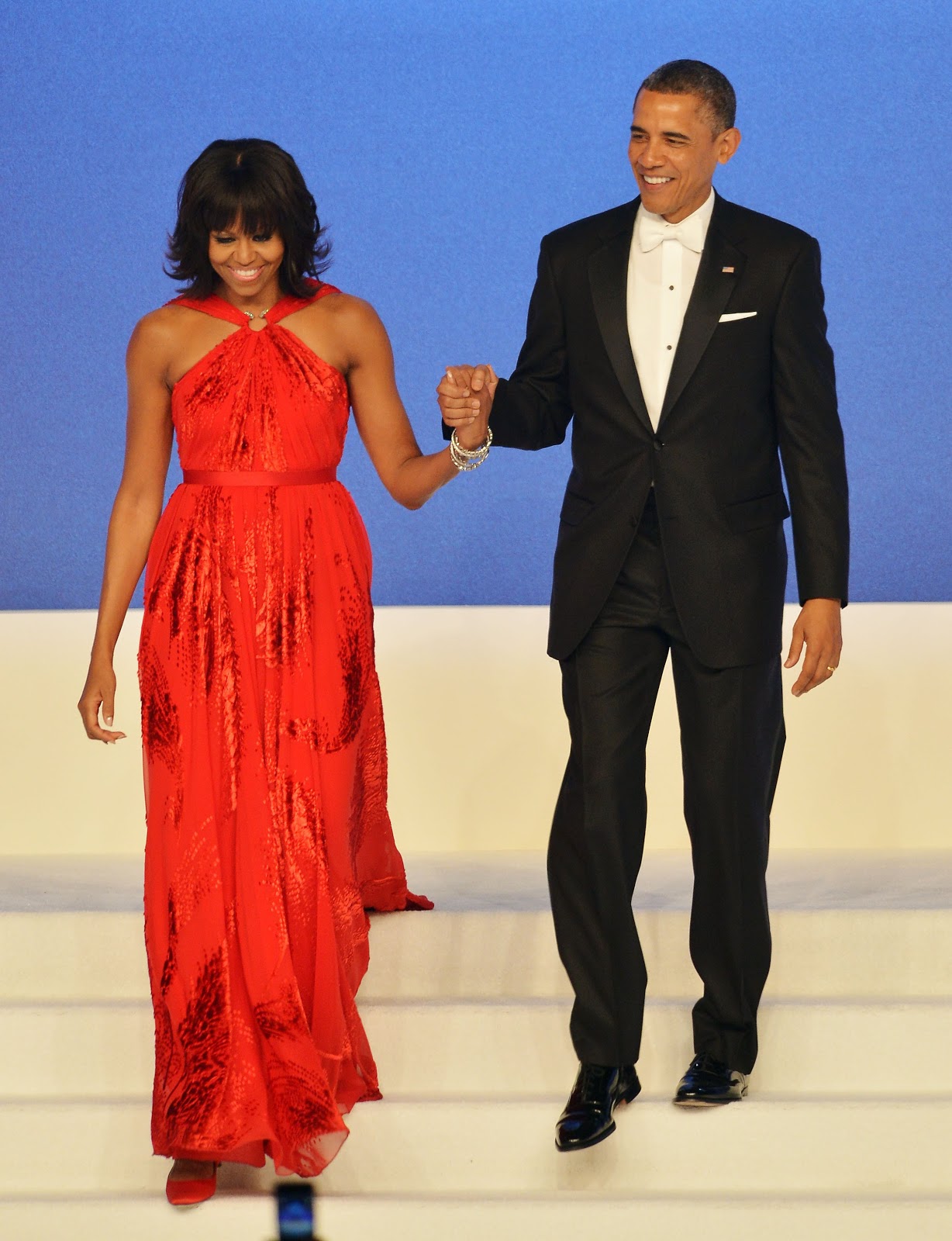
Before First Lady Michelle Obama joined her husband at his public inauguration, the most immediate question for many in the audience was, “Who is she wearing?”

Michelle Obama's choice of attire is among the few genuine unknowns surrounding President Barack Obama's second term inaugural. And while it may seem laughable to some, it’s an endorsement that could potentially mean millions of dollars in new business for a designer. Her decision to wear a flowing ivory gown by young designer Jason Wu to the inaugural balls four years ago made him a major force in the fashion industry. The ruby-colored chiffon and velvet dress was a follow-up to the white gown Wu made for her in 2009.

"I can't believe it. It's crazy," said Wu. "To have done it once was already the experience of my life. To have a second time is tremendous."She paired the dress with a handmade diamond embellished ring by jewelry designer Kimberly McDonald, and shoes designed by Jimmy Choo. At the end of the inaugural festivities, the first lady's outfit and accompanying accessories will go to the National Archives.
In an image-conscious society, Michelle Obama embodies the importance of honing a signature style and remaining true to it, said Mikki Taylor author of "Commander-in-Chic: Every Woman's Guide to Managing Her Style Like a First Lady."

Developing a personal style that fits our lives and our bodies frees us from worrying about what to wear and lets us focus on what really matters.

Her outfits emphasize fashion and function, reflecting her broader platform of healthy and active living, said decorative arts historian Carmela Spinelli, chair of the Savannah College of Art and Design's fashion department. When she bares her arms for a gym class with schoolchildren, she makes headlines on the politics page and the style section, inspiring Americans to hit the floor for push-ups and reconsider sheaths under cardigans.

Her support for emerging designers of diverse backgrounds and influences has bolstered the fashion industry's bottom line while reflecting the country's diverse cultural landscape, Spinelli said.


Designer Jason Wu and his sketch for Michelle's custom designed Inauguration Gown

Owning your personal style makes shopping easier because you can do so without feeling beholden to trends. Sticking to what flatters you also helps you dress with confidence each morning without feeling the need to seek approval from others.

Michelle Obama is tall and statuesque but she's not the typical model size. Yet she looks great in whatever she wears because she has figured out what works for her body and lifestyle and stays true to her personal style, said celebrity stylist Phillip Bloch.


✉ Email us today for a quote on any of the styles pictured above.


Find us on Facebook to read our client testimonials.

Friday, January 4, 2013

Conflicting Choices

Recently, while browsing in a jewelry store I began making small talk with a diamond salesperson.  It turns out she is one of the few people who has ever been allowed to visit the Canadian diamond mines in the northern most part of the country. As you can imagine, they don't want just anyone wandering around there! These diamonds are very successful in the Canadian market, to some extent because consumers want to buy nationally produced products.  But there is a darker force influencing diamond shoppers today.

It’s become well-known among consumers that many diamonds have histories tied to violence and human suffering. But most people looking for a diamond never receive any more information than these basic words of advice: avoid buying a “blood” or “conflict” diamond. That advice is surely, well-intentioned, but it’s hardly enough information to make an educated and ethical choice. The truth is, many so-called “conflict free” diamonds are not actually free from bloodshed and other serious injustices including child labor, worker exploitation, and sexual violence. How is it that reputable jewelers could be misleading customers about such serious issues? Why isn’t the diamond industry being held accountable to a higher standard? The simple answer is that the industry has done a masterful job of setting the terms of the debate – and of encouraging any discussion about blood diamonds to end before it even starts. But if you want a more complete answer, it’s helpful to take a deeper look at what happens in jewelry stores, at the history of the blood diamond issue, and at how the diamond industry developed a marketing strategy that misleads consumers and makes real change a serious challenge.

Ethical Origins


Where do ethically-sourced diamonds come from?

Look for diamonds originating from Canada.
Canadian diamonds are some of the most ethically-mined diamonds available. Diamonds from Canada are mined in the Northwest Territories in accordance with Canada's strict labor and environmental laws. Canadian diamond mines work cooperatively with local indigenous communities and are carefully protecting the Arctic environment.

Look for diamonds originating from Namibia or Botswana.
Of the countries in Africa that produce diamonds, Botswana and Namibia have done an especially good job of managing their diamond resources. In both countries, the diamond industry supports investments in education and infrastructure and raises the standards of living for all citizens. Mining operations in Namibia and Botswana are violence-free and meet strict labor and environmental standards.

Potential Pitfall: Avoid diamonds from Zimbabwe, Angola, and Côte d’Ivoire.
Diamonds from Zimbabwe and Angola are tainted by killings, torture, beatings, sexual violence, corruption, and the use of forced labor. In Côte d’Ivoire, diamonds are also fueling a lengthy civil conflict. Any retailer who admits to providing diamonds from these countries should be strictly avoided.

Potential Pitfall: Avoid retailers who cannot identify a mine or country of origin.
Retailers should know exactly where each of their diamonds was mined. They should also have detailed information about the labor and environmental conditions in place at those mines. Retailers with incomplete information on the source of their diamonds are not providing a reliably ethical product.

Defining "Beyond Conflict Free"

What does it mean for a diamond to be ethical or go "beyond conflict free"?
Look for diamonds free from all violence, not just civil wars. For a diamond to be ethically sourced, at the very least, it should not have financed a civil war. But diamond-fueled violence often happens in countries that are not officially at war. An ethically-sourced diamond should be mined in conditions wholly free from bloodshed, genocide, and any human rights conflicts, regardless of the cause.

Look for diamonds mined in accordance with strict labor and environmental standards.
To be ethically sourced, a diamond must be mined in keeping with strict labor regulations and environmental standards. Child labor should not be used. Workers should earn fair wages and enjoy safe, decent working conditions. Miners or mining companies must take care to avoid serious environmental harm and treat local ecosystems with respect.

Quality & Affordability

Are ethical diamonds the same quality?

Buying an ethically-sourced diamond does not mean compromising on quality.
Diamonds from Canada, Namibia, and Botswana meet the highest labor and environmental standards. They are also known for their exceptional quality. But it should be emphasized that the quality of an individual diamond depends on objective characteristics such as cutclaritycolor, and carat weight. When considering diamonds greater than 0.30 carats, make sure the diamond has an independent lab grading report from a leading gem lab. 
Are ethically-sourced diamonds easy to find?

YES! Ethical choices are available from select retailers.
A broad selection of ethically-sourced diamonds are available today through verified suppliers, such as Brilliant Earth. Canadian diamonds remained undiscovered well into the last century. When they were eventually discovered, special priority was placed on negotiating mutually beneficial agreements with local indigenous populations and respecting the Arctic environment. A broad inventory of high quality Canadian diamonds is currently available in popular shapes and sizes. Additional sources of ethically-sourced diamonds are available from Namibia and Botswana, where diamonds are fully verified to be mined, cut, and polished using responsible and labor and environmental practices.

You don't have to compromise on price.
Choosing an ethically-sourced diamond does not mean higher prices. Many companies offer excellent value by providing socially conscious jewelry at the lowest possible price, generally lower than many traditional jewelry retailers offer for standard jewelry.

Retailer checklist

Use this handy checklist when checking out diamond jewelry retailers.
right Look forcross Avoid
1
Do you acknowledge that there are serious ethical problems in the diamond industry?
Retailers acknowledges ethical problems.
Retailer says not to worry about ethical issues.
2
Where can I find your diamond sourcing policies?
Available on website
or in printed form.
No official statement in written form.
3
Do you incorporate ethical considerations when deciding on diamond suppliers?
Retailer selects suppliers based on ethical considerations.
Buys whatever diamonds are available, without regard to ethical origin.
4
What are your standards for ethical sourcing?
Retailer avoids all diamonds tied to violence, child labor, and environmental harm.
Retailer avoids only conflict diamonds. Relies solely on compliance with Kimberley Process.
5
Where are your diamonds mined?
Mines or countries of origin are directly named. Diamonds come from Canada, Namibia, and/or Botswana.
No information available on mines of origin. Diamonds come from countries such as Zimbabwe, Angola, or Côte d’Ivoire.
6
Can you provide specific information on the labor and environmental standards in place at the mines you source from? 
Information is aviailable on labor and environmental conditions at mines.
No information available on labor and enviornmental standards.
7
Are your diamonds tracked from the mine, to cutting and polishing, to your store? 
Retailer has investigated supply chain and knows exact path diamonds take from mine to market.No knowledge of supply chain and no tracking ability.
8
Do you stand by your diamonds by providing a written guarantee of their ethical status?
Yes.No guarantee or just an oral "take our word."
Want to learn more about this important ethical issue?
Check out this months Foreign Policy article: Rough Cut

Friday, November 30, 2012

Pink Wedding Dresses Becoming a Trend


Wedding Gown by Alfred Angelo

Reposted from Iowa State Daily on Wednesday, October 31, 2012 
By Korrie Bysted

This year pink wedding dresses are a huge trend. With celebrities like Jenni “JWOWW” Farley, Anne Hathaway, Reese Witherspoon, Gwen Stefani and Jessica Biel wearing the color, how could everyone else not join in? 

Fashion experts and wedding dress lovers across the nation agree on the popularity of the new trend. Many go-to wedding sites are chiming in their opinions on the new blush-pink dress trend. According to Brides.com, “head to toe blush gowns are the new normal.” 

Soundtracktoido.com writes: “Just like music, fashion speaks as well. Femininity and romance are characterized by the color pink and what more romantic day than your wedding day? These blush dresses make a statement.” 

Additionally, many designers, such as Vera Wang, 
Wedding Gown by Alfred Angelo
Carolina Herrera and Monique Lhuillier, have used pink as an accent color on bridal gowns in the past.

During the Spring 2013 season, however, pink was less an accent and more the star of the runways. It’s not just pink making a splash in bridal trends this season — it’s color in general. There have been numerous spottings of celebrity brides in yellow, green, red, purple and even black dresses on their big days.

The Huffington Post got it right when they said: “Remember that time we speculated that after Reese Witherspoon and Anne Hathaway in pink, and Amber Tamblyn in yellow, colored wedding dresses were a thing? Apparently Jessica Biel went and wore a pink and white gown to her Italian wedding. So there you have it: After not one, not two but three pink wedding dresses (plus some yellow and green thrown in for good measure), the trend for colored wedding dresses is official.” 

It’s well known that pink, or blush, is flattering on almost every skin tone; as opposed to white, which generally only looks good on some.


Skin tone aside, it may not be a good reason to shy away from tradition. There are a lot of people that may disagree, but if you plan on wearing pink on your wedding day, make sure it’s because you want to make that statement, not because it looks better on you than white does or because celebrities are doing it.

With all of this in mind, there have been some noteworthy things started because of this trend. For example, a new magazine called “The Pink Bride” has been created. The magazine provides “local pictures, wedding stories and planning advice from many of Tennessee’s best wedding professionals.” The publication has also been producing bridal shows since 2000, according to its website.

Additionally, “Brides” magazine started an initiative called “Something Pink,” which supports research on breast cancer, according to Style.com. “They asked 21 designers to create custom gowns in a rose-colored theme, with the proceeds going to the Breast Cancer Research Foundation.”

No matter what your stance is on colored wedding dresses or the rising trend of pink gowns, we can all agree that for the most part, wedding dresses are beautiful no matter what. With colored dresses being a trend across the nation and more brides getting the guts to step outside the box, don’t be afraid to try it yourself. If a colored dress is your thing, go for it!

Email us today for a quote on any of the styles pictured above.

Find us on Facebook to read our client testimonials.

Friday, September 30, 2011

Organic Fabrics


Farrah Furtado Couture is excited to announce the arrival of organic, environmentally friendly fabrics for our clients! We are pleased to offer a selection of bamboo, banana yarn, and hemp fabrics to choose from to create the fashions of your dreams. Check out our Facebook Fan Page for some inspiration!

✉ Email us today for a quote.

Find us on
Facebook to read our client testimonials.

Saturday, August 6, 2011

Royal Wedding Style

Zara Phillips, daughter of Princess Anne, was married to Mike Tindall, a rugby player, on July 30, 2011 at Canongate Kirk in Edinburgh, Scotland.


The bride wore a beautiful ivory faille and satin gown, which was most likely designed by Stewart Parvin. The dress had a bell-shaped silhouette and a concealed corset. Silk tulle straps over her shoulders formed a v-shape at the back.

Zara's floor-length veil was topped off with the Greek Key tiara, lent to the bride by her mother, the Princess Royal.


The wedding was simply perfect, but the newlyweds' honeymoon plans have been delayed. They both had to back to work immediately.

Prince William and his wife Kate also attended the nuptials. Kate wore a pale gold brocade coat by DAY Birger et Mikkelsen, a Collette Dinnegan dress and a Gina Foster Millinery hat.